
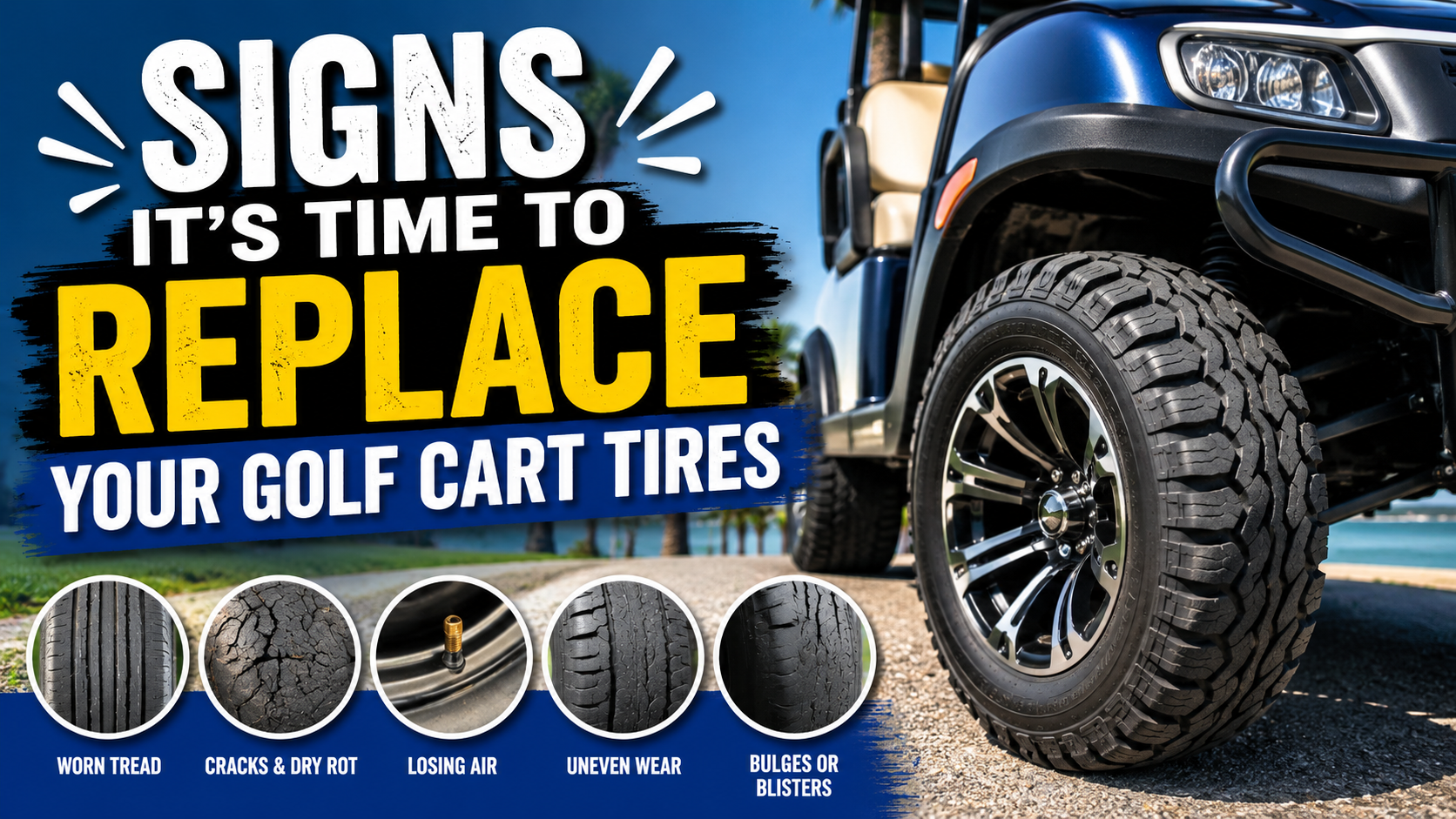
Whether you use your golf cart to get around your neighborhood, cruise through a campground, navigate a job site, or enjoy life around Florida’s communities, your tires play a huge role in keeping every ride safe and comfortable. While batteries and motors often get the most attention, worn-out tires can affect everything from handling and braking to efficiency and ride quality.
Many golf cart owners don’t realize their tires are due for replacement until they experience a flat or notice a serious performance issue. Replacing your tires before they become a problem helps protect your investment while giving you a smoother, safer ride.
Here’s how to recognize the signs that it’s time to replace your golf cart tires.
Your Tire Tread Is Worn Down
The most obvious sign your tires need replacing is worn tread. Tire tread provides the grip needed for acceleration, turning, and stopping safely.
As tread wears away, your golf cart has less traction on pavement, grass, gravel, and wet surfaces. This can make your cart feel less stable, especially during sharp turns or sudden stops.
Inspect your tires regularly by looking at the grooves across the surface. If they appear shallow or nearly smooth, it’s time for a replacement.
Replacing worn tires before they become completely bald helps maintain safe handling and extends the life of your suspension components.
Cracks Are Forming in the Rubber
Florida’s sunshine is wonderful for golf cart owners—but it’s hard on rubber tires.
Constant UV exposure, heat, and changing temperatures slowly dry out the rubber over time. As the rubber ages, small cracks begin appearing along the sidewalls or between the tread blocks.
These cracks, often called dry rot, weaken the structure of the tire and increase the risk of failure.
Even if your tread still looks good, cracked tires should be replaced before they become unsafe.
The Tires Keep Losing Air
Golf cart tires naturally lose a little air over time, but needing to refill them every few days is a warning sign.
Slow leaks can come from:
- Aging rubber
- Small punctures
- Damaged valve stems
- Corrosion around the wheel
- Internal tire damage
While minor leaks can sometimes be repaired, older tires that constantly lose pressure are often better replaced.
Proper air pressure helps your golf cart steer correctly, reduces tire wear, and improves battery efficiency.
Your Ride Has Become Rougher
If your golf cart suddenly feels bumpier than it used to, worn tires may be part of the problem.
As tires age, the rubber becomes harder and less flexible. Instead of absorbing small bumps in the road, the tires transmit more vibration into the cart.
Many owners assume they have suspension issues when the real culprit is simply old tires.
Fresh tires often make a golf cart feel noticeably smoother and quieter.
You Notice Uneven Tire Wear
Take a close look at each tire individually.
If one side of the tread is wearing faster than the other—or if one tire is much more worn than the rest—it usually indicates another issue beyond normal wear.
Uneven wear can be caused by:
- Incorrect tire pressure
- Worn suspension parts
- Alignment problems
- Overloading the cart
- Frequent sharp turns
Once uneven wear becomes severe, replacing the tires is usually the safest option while also correcting the underlying problem.
Your Steering Feels Different
Have you noticed your steering feels loose or unstable?
Old tires can make your golf cart:
- Wander while driving
- Pull to one side
- Feel unstable in turns
- Vibrate through the steering wheel
- Require constant steering corrections
While steering problems sometimes originate elsewhere, worn or damaged tires are often one of the first things technicians inspect.
New tires restore predictable handling and improve overall driving confidence.
The Tires Have Flat Spots
Golf carts that sit unused for long periods often develop flat spots.
When tires remain parked in one position for weeks or months, the weight of the cart compresses the rubber in one area.
Once driven again, flat-spotted tires may create:
- Bouncing
- Vibration
- Uneven rolling
- Noisy driving
Sometimes the flat spots disappear after driving for a while, but permanent flat spots usually require tire replacement.
You Frequently Drive on Different Surfaces
Not every golf cart stays on perfectly smooth golf courses anymore.
Many Florida owners use their carts on:
- Neighborhood streets
- Gravel driveways
- Dirt paths
- Campgrounds
- Parks
- Beach communities
- Construction sites
If your current tires weren’t designed for your typical terrain, they may wear much faster or provide poor traction.
Replacing your tires with ones better suited to your driving conditions can improve comfort, safety, and performance.
You Recently Upgraded Your Golf Cart
Many owners customize their carts with:
- Lift kits
- Larger wheels
- Heavier accessories
- Rear seats
- Utility beds
- Audio systems
These upgrades increase the overall weight of the vehicle and may require different tires to handle the added load properly.
If your original tires were designed for a stock golf cart, upgrading to higher-capacity tires may improve stability and longevity.
Your Tires Are More Than Five to Seven Years Old
Unlike batteries, tires don’t always wear out because of mileage.
Rubber naturally ages over time—even if the cart isn’t driven very often.
Many golf carts spend much of the year parked inside garages or storage buildings. While this helps, age still slowly weakens the rubber compounds.
If your tires are more than five to seven years old, it’s worth having them inspected even if they still appear to have adequate tread.
Older tires are far more likely to crack, separate, or fail unexpectedly.
You See Bulges or Blisters
A bulge in the sidewall is never normal.
Bulges usually indicate internal damage where the tire’s structural layers have weakened.
Driving on a bulging tire greatly increases the risk of a blowout.
If you notice any bulges, bubbles, or unusual swelling, replace the tire immediately rather than attempting a repair.
Braking Distance Has Increased
If your golf cart takes longer to stop than it used to, don’t automatically assume the brakes are the problem.
Worn tires reduce traction, especially on wet pavement.
Even with perfectly functioning brakes, reduced grip means your cart needs more distance to come to a complete stop.
Replacing worn tires often restores much of the original braking performance.
The Ride Feels Less Stable Around Corners
Golf carts have a relatively high center of gravity compared to their size.
When tires lose tread or become hardened with age, cornering stability decreases.
If you notice the cart leaning more, sliding slightly during turns, or feeling unstable at higher neighborhood speeds, your tires may no longer be providing enough grip.
Fresh tires help improve cornering confidence while reducing unnecessary stress on suspension components.
You Experience More Tire Punctures
Older rubber becomes thinner and more vulnerable to punctures from:
- Nails
- Sharp rocks
- Glass
- Metal debris
- Tree branches
If you’re repairing flats more frequently than before, replacing the tires may actually save money over time.
Newer tires provide stronger construction and better resistance to everyday hazards.
Choosing the Right Replacement Tires
Not every golf cart tire is the same.
The best tire depends on how you use your cart.
Common options include:
Street Tires
Ideal for neighborhoods and paved roads. These provide a smooth, quiet ride with excellent tread life.
All-Terrain Tires
Perfect for gravel roads, campgrounds, parks, and mixed-use driving.
Off-Road Tires
Designed for hunting property, trails, farms, and rough terrain where maximum traction is needed.
Low-Profile Tires
Popular for customized golf carts with upgraded wheels and modern styling.
Choosing the correct tire improves comfort, handling, and overall driving enjoyment.
Don’t Forget Proper Tire Maintenance
Once you’ve installed new tires, regular maintenance helps maximize their lifespan.
Simple habits include:
- Checking air pressure monthly
- Inspecting tread regularly
- Cleaning debris from the tires
- Rotating tires when appropriate
- Avoiding overloading the cart
- Parking in shaded or covered areas whenever possible
Routine maintenance can add years to the life of your tires while keeping your golf cart performing its best.
Trust The Cart Guys for Golf Cart Tires and Service
Your golf cart should provide a smooth, reliable ride every time you head out. If your tires are showing signs of wear, cracking, uneven tread, or poor performance, replacing them before they fail is one of the smartest investments you can make.
At The Cart Guys, we help golf cart owners throughout Melbourne and the surrounding Brevard County area choose the right tires for their specific needs. Whether you’re looking for comfortable street tires, rugged all-terrain options, or upgraded wheels to match your custom cart, our experienced team can recommend the perfect solution. We also provide professional installation and complete golf cart service to keep your cart safe, reliable, and ready for every adventure.
